Generative AI Guide for Beginners: How It Works and Tools 2026
Learn what generative AI is, how it works, and the best tools to get started. Complete guide for beginners who want to understand generative AI technology.
Generative artificial intelligence has been a hot topic in recent years. From creating stunning images to writing coherent articles, generative AI opens up new possibilities that once only existed in science fiction. But many beginners still wonder: what exactly is generative AI and how do you use it?
This guide answers those questions. You will learn what generative AI is, how it works, real-world use cases, popular tools to try, and tips for getting started — including using the Farisium Anime Generator integrated with Farisium AI Tools.

What is Generative AI?
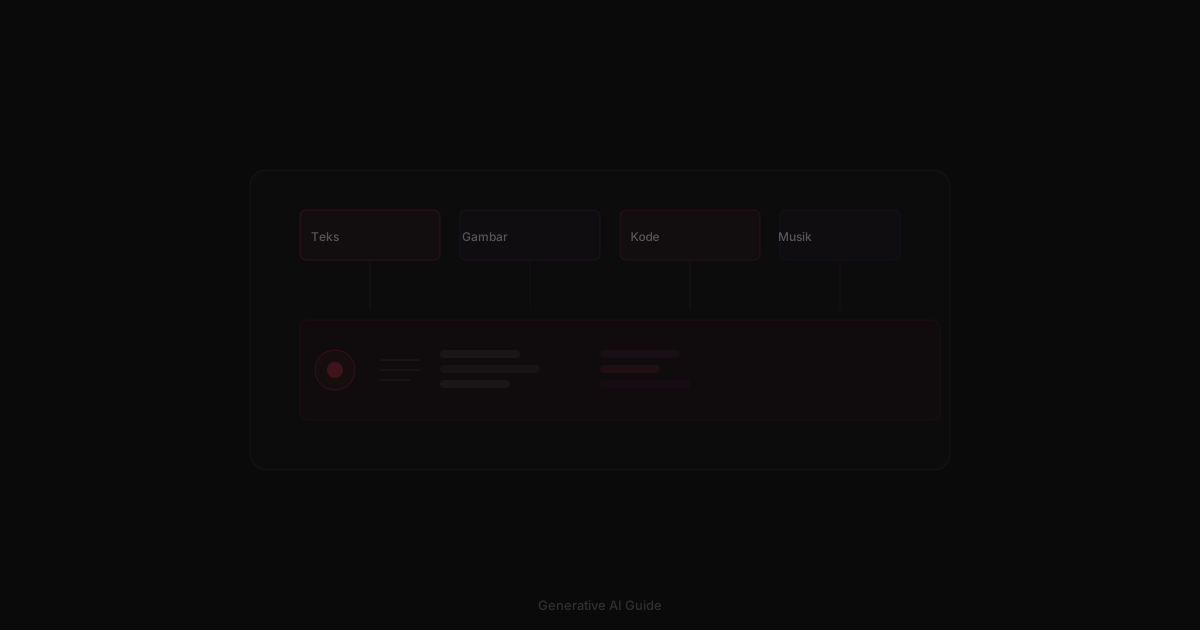
Generative AI is a type of artificial intelligence capable of creating new content — whether text, images, music, code, or video. Unlike traditional AI that only analyzes data (e.g., classifying emails as spam or not), generative AI learns patterns from training data to produce something original that has never existed before.
Popular examples include large language models (LLMs) like GPT from OpenAI ↗ that can write articles and answer questions, image generators like Stable Diffusion that turn text into visuals, and specialized tools like the Farisium Anime Generator optimized for anime illustrations. Each model is trained on millions of data samples to understand patterns, styles, and context.
How Generative AI Works
Generative AI works by learning patterns from large datasets. For example, anime image models are trained on millions of anime illustrations to understand composition, lighting styles, character proportions, and other visual characteristics. This training process is computationally intensive — typically requiring thousands of GPUs running for weeks.
After training, the model can generate new content through a process called inference. When you provide a text prompt, the model uses its mathematical representation of learned knowledge to create a new output matching your description. The key to great results is a good prompt — learn prompt crafting techniques in How to Write AI Anime Prompts.

Generative AI vs Traditional AI
Understanding this difference helps you know when to use generative AI versus other AI approaches:
- Traditional AI: Analyzes existing data — classification, regression, clustering. Examples: spam detection, product recommendations, price prediction.
- Generative AI: Creates original new data — text, images, music, code. Examples: writing articles, creating illustrations, generating program code.
- Traditional AI answers "what is this?" while generative AI answers "create something new based on these patterns".
Learn more about traditional AI in the Machine Learning Guide for Beginners covering supervised and unsupervised learning.
Use Cases of Generative AI
Generative AI has been used across various fields with significant impact:
- Image and illustration creation for social media, websites, and marketing materials — including AI for Graphic Design 2026.
- Blog content, articles, captions, and copywriting — see AI for Content Creators and AI for Content Marketing.
- Code generation, debugging, and technical documentation — dramatically boosting developer productivity.
- Music and sound effect creation for multimedia content and video production.
- Product design, mockups, and rapid prototyping for industrial designers and architects.
Check out the Best AI Image Generators Comparison 2026 to choose the tools that best fit your needs.
Popular Generative AI Tools
Various generative AI tools are now available to the public — from free to paid, from simple to advanced. OpenAI ↗ offers ChatGPT for text and DALL-E 3 for images with a beginner-friendly interface. For specific needs like graphic design, read AI for Graphic Design 2026 covering the best tools in that field.
For anime images and Japanese-style illustrations, the Farisium Anime Generator is the ideal choice — using a model fine-tuned specifically for anime style, costing only 1 FRSC per generation, and fully integrated with Farisium AI Tools. You can also get free FRSC through daily Rewards.
Tips for Starting with Generative AI
Follow these tips to get the most out of your generative AI journey:
- Start with free or freemium tools to experiment without financial risk — ChatGPT ↗ for text, Farisium Anime Generator for images.
- Read documentation and user guides to understand the capabilities and limitations of each tool.
- Join AI communities — Discord, Reddit, or local forums — to share experiences and learn from other users.
- Experiment with different prompts to understand how AI responds to various instructions. Keep notes on what works and what does not.
- Use AI results as inspiration and starting points, then develop them with your personal touch for unique output.
- Learn AI ethics — do not use for plagiarism, misleading content, or copyright infringement.
Frequently Asked Questions (FAQ)
What is the difference between generative AI and traditional AI?
Traditional AI analyzes existing data — like classifying images or predicting numbers. Generative AI creates new, original content — like writing stories or drawing illustrations. Both are important, but generative AI is currently receiving more attention due to its creative capabilities.
Is generative AI free?
Many generative AI tools offer free access with limitations. ChatGPT's free tier, Farisium Anime Generator with FRSC from daily Rewards, and locally installed Stable Diffusion can all be used at no cost. Premium features typically require subscriptions starting from $10-20 per month.
Is AI-generated content safe for commercial use?
It depends on each platform's license. Farisium Anime Generator permits full commercial use. OpenAI allows it for ChatGPT Plus and Enterprise users. Always check each platform's terms and conditions before using generated content for business purposes.
How do I write good prompts for generative AI?
Use clear, specific language. Describe the subject, style, atmosphere, and desired technical details. For images, add quality keywords like "masterpiece, high quality". Avoid contradictory instructions. Learn complete techniques in How to Write AI Anime Prompts.
What are the risks of using generative AI?
Key risks include: bias in output (from unbalanced training data), potential plagiarism, inaccurate results (AI hallucination), and data privacy concerns. Always verify AI output, especially for factual content and important decisions.
Can generative AI replace human creativity?
No. Generative AI is a tool that expands human creativity, not replaces it. Original ideas, cultural context, empathy, and aesthetic decisions still require the human touch. The best results come from collaboration between humans and AI.
Conclusion
Generative AI is a transformative technology that opens new possibilities across various fields — from art to programming. By understanding how it works and following the tips discussed, even beginners can start leveraging this technology to boost creativity and productivity.
Start with free tools, practice consistently, and keep exploring the boundaries of AI capabilities. Also check out How to Use AI for Work Productivity to integrate generative AI into your daily workflow, and the Machine Learning Guide for Beginners for deeper understanding. See also the Future of AI in Indonesia 2026 to understand AI trends and opportunities in Indonesia.
Try Generative AI
Start with Farisium Anime GeneratorPertanyaan Umum
Traditional AI analyzes existing data — like classifying images or predicting numbers. Generative AI creates new, original content — like writing stories or drawing illustrations. Both are important, but generative AI is currently receiving more attention due to its creative capabilities.
Many generative AI tools offer free access with limitations. ChatGPT's free tier, Farisium Anime Generator with FRSC from daily Rewards, and locally installed Stable Diffusion can all be used at no cost. Premium features typically require subscriptions starting from $10-20 per month.
It depends on each platform's license. Farisium Anime Generator permits full commercial use. OpenAI allows it for ChatGPT Plus and Enterprise users. Always check each platform's terms and conditions before using generated content for business purposes.
Use clear, specific language. Describe the subject, style, atmosphere, and desired technical details. For images, add quality keywords like "masterpiece, high quality". Avoid contradictory instructions. Learn complete techniques in [[How to Write AI Anime Prompts](/blog/how-to-write-ai-anime-prompts)].
Key risks include: bias in output (from unbalanced training data), potential plagiarism, inaccurate results (AI hallucination), and data privacy concerns. Always verify AI output, especially for factual content and important decisions.
No. Generative AI is a tool that expands human creativity, not replaces it. Original ideas, cultural context, empathy, and aesthetic decisions still require the human touch. The best results come from collaboration between humans and AI.
Related Articles
Machine Learning Guide for Beginners 2026
Learn machine learning from scratch. Complete guide covering concepts, types, tools, and practical steps to start your ML journey for beginners.
AI for Graphic Design: Best Tools and Tips 2026
The graphic design revolution with AI. Discover the best AI graphic design tools of 2026, usage tips, and how to maximize creativity with AI assistance.
Prompt Engineering for AI Anime: How to Craft the Perfect Prompt
Learn the art and science of prompt engineering for generating high-quality anime images. From basic components to advanced techniques.

M. Faris Deni K.
Founder & Developer of Farisium. Writing about AI, technology, and platform development.