
AI Voice Cloning Scams: How to Recognize Fake Voice Calls in 2026
AI voice cloning scams are getting more convincing. Learn the red flags, quick verification steps, and how to protect your family from fake voice calls.
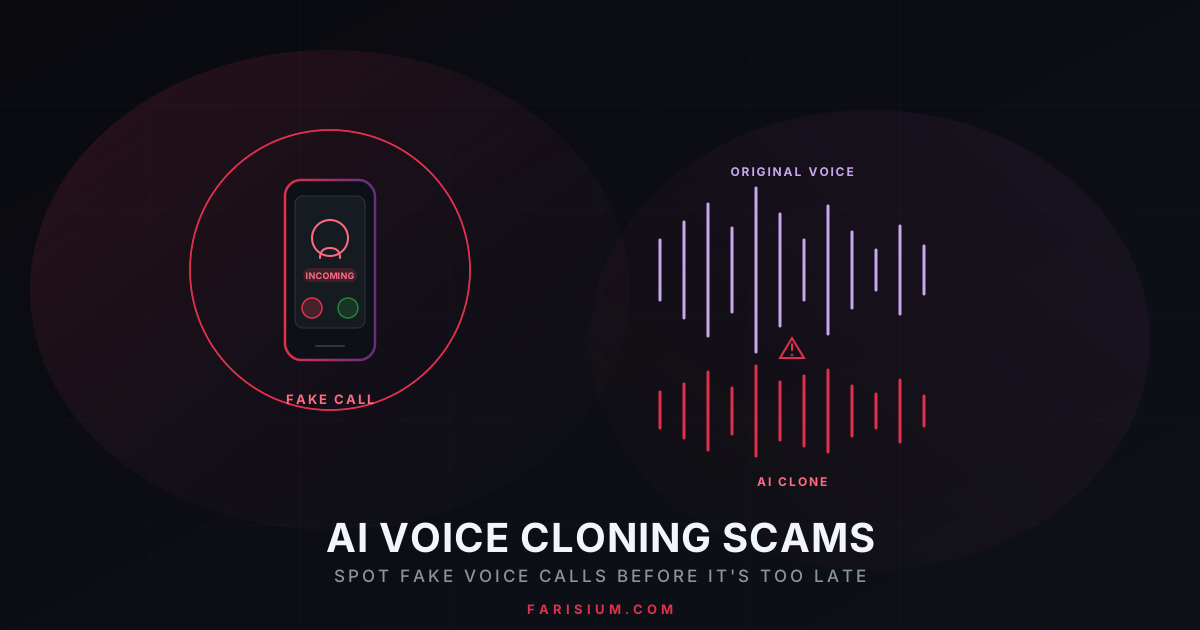
Picture your phone ringing, and the voice on the other end is your mother, your sibling, or your boss — panicked, asking you to transfer money right now. It sounds convincing, the tone and cadence feel right. The problem: it's not them. It's an AI voice clone, built from a few seconds of real audio pulled from a social media video or an old voicemail.
This isn't a science fiction scenario. AI-based voice cloning is now cheap and accessible, and scammers have started using it to run far more convincing scams than old-style phone fraud. This article covers how it works, the red flags you can learn to spot, and quick verification steps for when you're not sure.
What Is AI Voice Cloning and Why It's Getting More Dangerous
AI voice cloning is technology that learns a person's vocal patterns — pitch, speech rhythm, accent — from audio samples, then generates new audio that sounds like that person saying anything you type in. It started with legitimate uses like film dubbing or voice assistants, but the audio sample needed today is down to a matter of seconds — far shorter than it was just a few years ago. Cybersecurity agencies like the UK's National Cyber Security Centre ↗ now rank this kind of AI misuse among the fastest-growing threats.
What makes this dangerous: almost everyone has public voice samples without realizing it. Instagram videos, Reels, recorded video calls, even voice notes in a WhatsApp group — all of it can become raw material for cloning someone's voice without their consent.
How Scammers Use It
The most common pattern: scammers manufacture a fake emergency that demands a fast decision, so the victim doesn't have time to think clearly or double-check anything.
- An "accident" — a panicked voice claiming to be your child or sibling, asking for an urgent hospital-fee transfer, insisting you don't call a parent or partner first.
- A fake "kidnapping" — an extreme scenario pressuring the victim to send a ransom within minutes.
- An "urgent boss" — a voice claiming to be your manager, demanding a sudden transfer for a "confidential" business matter outside work hours.
- A fake "bank or police verification" call, requesting an OTP code or account details under the guise of security.
What makes this tactic more effective than a plain text scam: a familiar voice carries far more emotional weight. Hearing a recognized voice in apparent distress triggers an instinctive urge to act immediately rather than think it through. The problem is serious enough that regulators have stepped in — the FCC in the United States officially declared AI-generated voices in robocalls illegal ↗.
Why Users in Indonesia Are an Easy Target
A few habits that are common here actually make this scam more effective. Sudden money transfers between family members via e-wallets or mobile banking are already normal, so an urgent transfer request doesn't feel out of place. A tight-knit family culture also means people tend to help immediately without asking too many questions when a relative is "in trouble." On top of that, sharing an OTP code over the phone with someone claiming to be an "official representative" still happens often, even though that's one of the clearest red flags out there.
That combination — fast transfers being normal, a culture of mutual help, and low awareness around OTP safety — can make voice cloning scams more effective here than in countries with more cautious financial habits or stricter bank verification processes.
Red Flags You Can Learn to Recognize
AI voice cloning keeps getting better, but it still has a few tells if you know what to listen for:
- Excessive time pressure — there's always a reason you "can't wait" or "can't call anyone else first."
- A request for a money transfer or an OTP code mid-call, especially to an account or number you've never used before.
- Slightly stiff pacing between sentences, or emotion that sounds oddly flat given how panicked the content is supposed to be.
- Background noise that's either unnaturally clean or oddly repetitive.
- The caller avoids or refuses a video call, citing bad signal or a broken phone.
- The number calling is unfamiliar or different from the number that person usually contacts you from.
Quick Verification Steps When You're Not Sure
If any of those signs show up, don't panic — take a beat and verify before you act on anything. The same verification principle is recommended in the WhatsApp Help Center ↗ when account activity seems suspicious.
- Hang up, then call back using the number already saved in your contacts — not the number that just called you.
- Ask something very personal and specific that only the real person would know — not a generic question that's easy to guess.
- Verify through another channel: message the person directly on WhatsApp, or check with another family member or colleague.
- Never transfer money or share an OTP code based solely on a phone request, no matter how much pressure is applied.
Protecting Yourself and Your Family Going Forward
Beyond staying alert in the moment, there are preventive steps worth setting up now, especially for family members who are more vulnerable, like parents or elderly relatives. And if you want to understand how AI agents can be abused at a larger scale, this agentic ransomware guide covers that class of threat in depth.
- Set up a "family password" — a simple phrase only your immediate family knows, used to verify identity in a genuine emergency.
- Limit personal audio and video posted to public accounts, or at least stay aware of the risk.
- Educate family members less familiar with this technology about how AI voice cloning scams actually work — many people have no idea this is even possible.
- Keep important family contact numbers somewhere quick to access, so you're not scrambling through your contact list while panicked.
Conclusion
AI voice cloning turns phone scams from "a suspicious stranger's voice" into "a voice that sounds convincingly like someone close to you." The best defense isn't perfectly recognizing the voice itself, but building a verification habit — hang up, call back on a saved number, and never let time pressure rush your decision. If digital security is a topic you're interested in, read the signs your WhatsApp has been hacked and how to fix it, or check out the broader outlook on the future of AI in Indonesia.
Learn more about using AI safely and responsibly
Explore Farisium AI ToolsFrequently Asked Questions
Technically, yes, as long as there's a clear enough audio sample — and the sample needed today can be as short as a few seconds. More and cleaner samples produce a more convincing clone, but even a short clip from a social media video is enough for a basic scam attempt.
This scheme is widely known as a family emergency scam — the FTC documents its AI-powered version here. Contact your bank immediately to try to block the transaction if money was already sent, then file a report with local police along with your call history. Save screenshots or a recording of the conversation if you have one, as supporting evidence for the report.
AI voice cloning only mimics audio — voice alone, no visual element. Deepfake video mimics a person's face and movements in video form, often paired with a cloned voice too. Voice cloning is generally easier and cheaper to produce than a full deepfake video, which is why it's more commonly used in phone scams.
The more advanced tools available today can produce a fairly convincing clone from just a few seconds of good-quality audio. That's what makes anyone who's ever appeared in a public video, however briefly, a potential target.
Related Articles
How to Fact-Check AI Answers: A Practical 7-Step Workflow for Reliable Research in 2026
Learn how to fact-check AI answers with a practical 7-step workflow. Discover how to verify sources, detect hallucinations, compare evidence, and build more reliable AI research habits.
How to Build an AI Workflow That Actually Saves Time in 2026
Learn how to build an AI workflow that saves time instead of adding more tools. This practical framework helps freelancers and small teams choose tasks, design handoffs, add human review, and measure real productivity gains.
How to Build a Private AI Knowledge Base for Small Business: A Practical 2026 Guide
Learn how to build a private AI knowledge base for your small business. This practical guide covers document preparation, retrieval, privacy, testing, access control, and maintenance.

M. Faris Deni K.
Agentic AI Leader. Writing about AI, technology, and platform development.